1 year ago
(another fabulous TEDTalk :P )
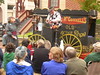
David Holt: The stories and song of Appalachia
Folk musician and storyteller David Holt plays the banjo and shares photographs and old wisdom from the Appalachian Mountains. He also demonstrates some unusual instruments like the mouth bow -- and a surprising electric drum kit he calls "thunderwear."
David Holt is also a four-time Grammy Award-winning folk musician.

I decided that by now folks might be ready for me to blog about something other than recycling.
Although I must warn you that I have 3 more recycling blogs in draft form (cue evil laughter) just waiting be unleashed.
But I figured a change would be nice.
So we have The Darby Ram.
Why? Because it's a fun storysong.
And...why not?
(BTW, although this is a great song for kids, there are a few versions or verses that are definitely more for adults, I added a link for one at the end if the blog)
The Darby or Derby Ram was originally an English folk song.
Basically, it tells the story of a humongous ram and the problems of butchering it and other outrageous lies about how large it was.
according to Wiki:
Llewellyn Jewitt wrote about the song in his The Ballads and Songs of Derbyshire of 1867, asserting that song had been alluded to for at least a century before that.
The song and the association of a ram with the town of Derby has been incorporated by a number of groups based there.
The song was also adapted by the English composer John Wall Callcott (1766-1821) into a 3 part glee "As I was going to Derby".

So enough about Plastic...let's talk about Paper!
I love making paper with kids. They have a great time and you never know what you will get. Making paper is great for using up the scraps of construction paper, wrapping paper or any kind of paper that is used in the class or at home.
I have included three different vids on papermaking
.
The first is a teacher doing a papermaking demo in class.
The second vid is a very good low tech papermaking vid with kids.
The third vid is a very nicely done slide show about papermaking.
After the vids, I have included a link to papermaking directions and a Yiddish folksong about recycling.
A great site for directions is Learn2 Make Paper ... this site has good pics also.
This Yiddish folksong is the original source for the Tailor Recycling Story in the previous blog.
I HAD A LITTLE OVERCOAT
(traditional Yiddish, English by Teddi Schwartz & Arthur Kevess)
(The midi for this song can be found at Mudcat MIDIs )
1.I had a little overcoat, as old as can be
Tralala lalalala lalala
What I'd ever do with it, I just couldn't see
Tralala lalalala lalala
So I thought a little while
And made myself a jacket in the very latest style
Tralalala lalala (2x)
Made a jacket in the very latest style
2. I had a little jacket, it was old as can be
Tralala lalalala lalala
What I'd ever do with it, I just couldn't see
Tralala lalalala lalala
So I thought a little while
And made myself a vest in the very latest style
Tralalala lalala (2x)
Made a vest in the very latest style
3. I had a little vest, as old as it could be
Tralala lalalala lalala
What I'd ever do with it, I just couldn't see
Tralala lalalala lalala
So I thought a little while
And I made myself a tie in the very lastest style
Tralalala lalala (2x)
Made a tie in the very latest style
4. tie / button
5. button / nothing
6. I had a little nothing, as old as it could be
Tralala lalalala lalala
What I'd ever do with it, I just couldn't see
Tralala lalalala lalala
So I thought a little while
And I made myself a song in the very lastest style
Tralalala lalala (2x)
Made a song in the very latest style
1. Hob ikh mir a mantl fun fartsaytikn shtof / Tralala...
Hot dos nit in zikh kayn gantsenem shtokh / Tralala...
Darum, hob ikh zikh batrakht
Un fun dem mantl a rekl gemakht
Tralala... / Fun dem mantl a rekl gemakht
2. Hob ikh mir a rekl... fun dem rekl a vestl gemakht
3. vestl / shnipsl
4. shnipsl / knepl
5. knepl / gornitl
6. gornit / dos lidele
(trad Yiddish, Eng words Teddi Schwartz & Arthur Kevess)
Mudcat MIDIs

The Fox is a traditional song.
I love singing this song.
There is lots of repetition which allows the children to start singing with you by the second verse.
The earliest written version is said to have appeared as a Middle English poem somewhere around the fifth century.
The Fox has been recorded by numerous people such as folksingers Odetta, Pete Seeger , Tom Chapin and Burl Ives, and as recently as 2000 by country group Nickel Creek.
It has also been written up as a picture book, The Fox Went Out on a Chilly Night by Peter Spier and others.The OXFORD BOOK OF NURSERY RHYMES states:
"This rollicking song is traditional in both England and America.... The song has descended from a carol which was probably already old when it happened to be written down on the flyleaf of a manuscript, c. 1500 (Royal MS 19 B. iv) The first verse went
'It fell ageyns the next nyght
the fox yede to with all his myghte,
with-outen cole or candlelight,
whan that he cam vnto the toowne.'"
Like most folk songs, there have been many versions of The Fox.
I have included 4 versions here.
The first version seems to be the most commonly used one at this time.
THE FOX
The fox went out on a chilly night
Prayed for the moon to give him light
For he had many a mile to go that night
Before he reached the town o (2x)
He ran til he came to a great big bin
Where the ducks and the geese were kept therein
Said, a couple of you are going to grease my chin
Before I leave this town o
He grabbed the grey goose by the neck
Throwed a duck across his back
He didn't mind the quack, quack, quack
And the legs all dangling down o
Then old mother Flipper-flopper jumped out of bed
Out of the window she cocked her head
Crying, John, John the grey goose is gone
and the fox is on the town o
Then John he went to the top of the hill
Blew his horn both loud and shrill
The fox, he said, I better flee with my kill
Or they'll soon be on my trail o
He ran till he came to his cozy den
There were the little ones, eight, nine, ten
Saying, Daddy, daddy, Better go back again
For it must be a mighty fine town o
Then the fox and his wife, without any strife
Cut up the goose with a carving knife
They never had such a supper in their life
And the little ones chewed on the bones o
**********************************************
FOX WENT OUT (Den-O)
A hungry fox jumped up in fright
And he begged for the moon to give him light,
For he had many miles to trot that night,
Before he reached his Den-o.
Den-o, Den-o, for he had many miles to trot that night
Before he reached his Den-o.
So he cocked up his head and out went his tail
And off he went on the long, long trail
Which he done many times in calm and gale
But he always got back to his Den-o.
Den-o, Den-o, (repeat last two lines).
And soon he came to the old farm yard
Where the ducks and geese to him were barred
But he always got one by working hard
To take back to his Den-o.
Den-o, Den-o, (repeat last two lines).
He grabbed the grey goose by the neck
And slung her right across his back
And the old grey goose went quack, quack, quack
But the fox was off to his Den-o.
Den-o, Den-o, (repeat last two lines).
Ol' Mother Slipper Slopper jumped out of bed
And out of the window she poked her head,
Oh, John, John, the grey goose has gone
And the fox is off to his Den-o.
Den-o, Den-o, (repeat last two lines).
John went up to the top of the hill
And he blew a trumpet loud and shrill
Said the fox, that's very pretty music, still
I'd rather be in my Den-o.
Den-o, Den-o, (repeat last two lines).
At last he got back to his den
To his dear little foxes eight, none, ten
And they've had many fat geese since then
And sometimes a good fat hen-o
Hen-o, Hen-o, (repeat last two lines).
********************************************
The Fox
A fox went out in a hungry plight,
and begged of the moon to hive him light,
For he'd many a mile to travel that night,
Ere he could reach his den-oh, den-oh, den-oh;
Fore he'd many a mile to travel that night,
Ere he could reach his den-oh, den-oh, den-oh:
At length he came to a farmer's yard
Where the ducks and geese declared it hard
That their nerves should be shaken and their rest be marred
By a visit from Mister Fox-oh, fox-oh, Fox-oh
That their nerves should be shaken and their rest be marred
By a visit from Mister Fox-oh, fox-oh, fox-oh.
He took the black duck by the sleeve;
Quoth he, "My dear sir, by your leave.
I'll take you away without reprieve,
And carry you home to my den-oh, den-oh, den-oh
I'll take you away without reprieve,
And carry you home to my den-oh, den-oh, den-oh.
He clutched him sharply by the neck,
And flung him right across his back;
The frightened ducks cried, "Quack,quack,quack,
The fox is off to his den-oh, den-oh, den-oh,
The frightened ducks cried, "Quack,quack,quack
The fox is offf to his den-oh, den-oh, den-oh.
Old Mother Slipper-slopper jumped out of bed,
And out of the window she popped her head:
"John, John, John, the black duck's gone,
And the fox is off to his den-oh, den-oh, den-oh
"John, John, John, the black duck's gone,
And the fox is off to his den-oh, den-oh, den-oh.
The farmer ran to the top of the hill,
And blew a blast both loud and shrill.
Quoth the fox, "Tis wondrous music;
Still I'd rather be in my den-oh, den-oh, den-oh,
Quoth the fox, "Tis wondrous music;
Still I'd rather be in my; den-oh, den-oh, den-oh
At last the fox got home to his den,
To his dear littles foxes, eight,nine,ten,
Said he, "We're in luck, here's a good fat duck,
With his legs hanging, dangling, down-oh, down-oh, down-oh,
Said he, "We're in luck, here's a good fat duck,
With his legs handing, dangling, down-oh, down-oh, down-oh.
He sat down to dinner with his hungry wife,
They did very well without fork or knife;
They ne're ate a better duck in all their life,
And the little ones picked the bones-oh, bones-oh, bones-oh,
They ne're ate a better duck in all their life,
And the little one picked the bones-oh, bones-oh, bones-oh.
****************************************
THE FOX
The old fox stepped out one moonshining night
Stood upon his hind feet just about right I'll have
some meat for my supper this night
Before I leave this townee (townee, townee)
I'll have some meat for my supper this night
Before I leave this townee
He went on down to the blacksmith's gate,
There he saw an old black drake
Come on along old drake and go along with me
You're the finest old fellow in this townee
(REPEAT AS PER FIRST VERSE)
The old drake sat still and the word cried NO
Just sat still 'cause he didn't want to go
If you eat no meat 'til you eat meat of mine
You'll eat no meat in the townee (REPEAT)
He went on down by the farmer's gate
These he swa an old grey goose
Come along old goose and go with me
You're the finest old fellow in the townee (REPEAT)
The old goose sat still and the word cried NO
Just sat still 'cause he didn't want to go
If you eat no meat 'til you eat meat of mine
You'll eat no meat in the townee (REPEAT)
He went on home to his den
Out come the young ones 8-9-10
O father, O father when you again
You've had no luck in this townee (REPEAT)
He went on back on his back track
He took the old grey goose by the neck
Her wing went flip-flop over his back
Her feet went dingle dangle down-ee (REPEAT)
Old mother tipped up in the bed
Out of the window she poked her head
Old man, old man the grey goose is gone
I thought I heard her go quack, quack-eo (REPEAT)
The old man jumped up in his shirtail
And with toe dogs on the trail
They caught the fox at the end of the trail
And that was the end of the fox-e-o (REPEAT)
Malvina Reynolds wrote many songs and poems in her life. Many of her songs are still sung. They have been recorded by artist such as Pete Seeger, Joan Baez and the Limeliters.
"Malvina Reynolds was born Malvina Milder on August 23, 1900, to a Jewish socialist immigrant family in San Francisco, California. Her parents ran a tailor shop together and their home was filled with political discussion and meetings........ There she earned both her Bachelor's and Master's degrees, and later, in 1938, her Ph.D. in Romance Philology.......... In 1934 She married carpenter and labor organizer William 'Bud' Reynolds and having a daughter in 1935. In the late forties (which were also her late forties) Bud and Malvina worked together on progressive political campaigns and she performed at folk music events in the Los Angeles area, along with Earl Robinson and other musicians active in Peoples’ Songs (whose Bulletin was a forerunner of Sing Out! magazine). She had been writing the occasional popular or political song since her late thirties; by her fifties, she had increased her output and added children’s songs to the mix. By the time the folk protest movements of the 1960s came along, she had honed her skills and was ready to take on the issues of the day: civil rights, opposition to the war in Vietnam, and the right of workers to organize. Overall she wrote hundreds of songs, some of great beauty and many displaying a sense of humor and wit that has endeared her to performers and listeners from Helsinki to Tokyo. Malvina Reynolds died on March 17, 1978, with gigs on her calendar."
I was very surprised, okay I was shocked, recently when during a workshop with elementary school children I asked them to sing Home on the Range as a warm up. The surprise came when the majority of the children said they did not know the song. Many had not even heard of it!
I have no idea when or how I learned "Home on the Range" I suspect I learned it in elementary school during a music class.
But I am sure I sang it at some point in school.
I find there are many "folk songs" that I think are main stream that even adults do not know. I find this very sad given that they are a part of the U.S. culture and history.
Home on the Range is the state song of Kansas. According to my research Dr. Brewster M. Higley originally wrote the words in a poem called "My Western Home." He wrote it in the early 1870s in Smith County, Kansas. "The song was picked up by settlers, cowboys, and others and spread across the nation in various forms. In the early 20th century, it was arranged by Texas composer David Guion (1892-1981) who is often credited as the composer. It was officially adopted as the state song of Kansas on June 30, 1947."
(source Wikipedia)
Home on the Range
Oh, give me a home where the buffalo roam,
Where the deer and the antelope play;
Where seldom is heard a discouraging word
And the skies are not cloudy all day
Chorus:
Home, home on the range
Where the deer and the antelope play
Where seldom is heard a discouraging word
And the skies are not cloudy all day.
How often at night when the heavens are bright
With the lights from the glittering stars
Have I stood there amazed and asked as I gazed
If their glory exceeds that of ours.
CHORUS
Oh, give me a land where the bright diamond sand
Flows leisurely down the stream;
There the graceful, white swan goes gliding along
Like a maid in a heavenly dream.
CHORUS
Where the air is so pure, the zephyrs so free,
The breezes so balmy and light,
That I would not exchange my home on the range
For all of the cities so bright.
CHORUS
Oh, I love those wild flowers in this dear land of ours,
The curlew I love to hear scream,
And I love the white rocks and the antelope flocks
That graze on the mountain tops green.
CHORUS
There are other verses.
Click here to hear the tune and find many other verses
And like most folk songs the verses vary from source to source.
I rarely use the entire song, usually the first 2 verses and the chorus.
"The Rattlin' Bog" is a cumulative song (think "The Twelve Days of Christmas") and is an example of the use of song to develop good memory.
Rattlin' Bog is Irish/Celtic in origin.
There are other similar tunes.
I grew up singing "And the Green Grass Grew All Around" which sounds a lot like Rattlin' Bog.
There is also a traditional Welsh song "Y Pren ar y Bryn" (The Tree on the Hill) that is similar to "Rattlin' Bog". It starts with....
What a grand old tree, Oh fine tree.
The tree on the hill, the hill in the valley,
The valley by the sea.
Fine and fair was the hill where the old tree grew.
(second verse)
From the tree came a bough, Oh fine bough ! etc..



 Posts
All Comments